


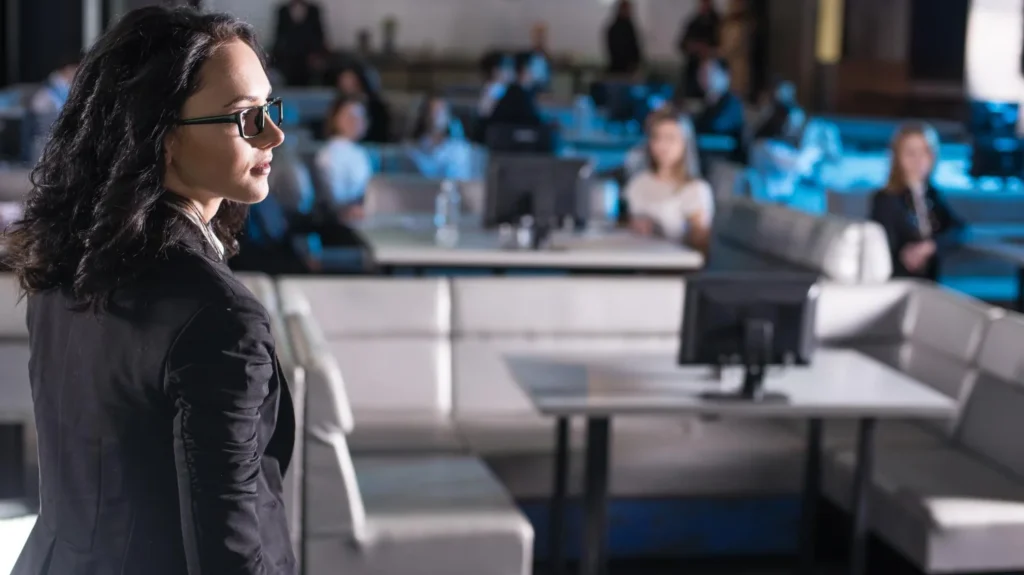
When a corporate event runs seamlessly, it is because a rigorous operation is working behind the scenes. High-end corporate event production remains invisible to attendees because it has been planned with enough precision to anticipate every variable and transform contingencies into solutions before they become problems.
What audiences see on stage, a flawless opening, engaging content, and a memorable closing session, is the result of weeks, and often months, of detailed supplier management, logistics coordination, technical production, and alignment with the client. Understanding these critical factors is essential for anyone responsible for selecting an event production partner.
The corporate events industry in Brazil continued to grow significantly in 2025, reflecting both increasing demand and a higher level of professionalization across the sector. As a result, choosing the right production partner has become a strategic decision long before it becomes an operational one.
Why Technical Production Shapes Event Perception
The quality of corporate event production is often judged first by what does not go wrong.
Audio interruptions, inadequate lighting, or presentations that fail to launch at the right moment can damage the credibility of the event and, by extension, the organization hosting it.
Effective technical production creates the conditions for content and people to take center stage without operational distractions. When technology works flawlessly, attendees forget it exists. When it fails, it becomes the focus of attention for all the wrong reasons.
There is also a symbolic dimension to production quality. A flawlessly executed event communicates that the organization values the time and presence of its audience. An event plagued by recurring technical issues sends precisely the opposite message, regardless of the quality of the content being delivered.
12 Critical Elements of Corporate Event Production
1. Comprehensive Technical Briefing
The process begins with a detailed briefing that covers event objectives, audience profile, desired experience, and operational constraints.
The more precise the briefing, the lower the likelihood of rework. Vague briefings lead to inaccurate budgets, misaligned expectations, and last-minute surprises.
2. Supplier Selection and Qualification
Supplier management is one of the most complex aspects of corporate event production.
Every supplier represents a critical link in the delivery chain, and a weak link can compromise the final outcome.
Before selecting any technical production partner, organizations should evaluate cost structures, dedicated resources, contingency policies, and experience with similar events.
3. Master Timeline with Built-In Buffers
Production schedules must include realistic buffer periods to absorb unexpected issues without affecting event timing.
Schedules without contingency time are plans with built-in failure points.
In corporate event production, unexpected challenges are not exceptions—they are a predictable part of the process.
4. Site Inspection
Before making decisions regarding layout or technical production, an on-site inspection is essential.
Actual dimensions, power infrastructure, acoustics, access logistics, and venue restrictions can only be fully understood in person.
Floor plans and photographs alone are insufficient for reliable technical decision-making.
5. Detailed Technical Production Plan
Audio, lighting, projection systems, staging, and scenic design require a comprehensive technical plan that includes equipment specifications, technical riders, floor plans, and installation schedules.
Supplier management at this stage requires both expertise and discipline, as every specification influences both cost and quality.
6. Registration and Guest Reception Management
Registration is the participant’s first interaction with the event experience.
Long lines, disorganized guest lists, or poorly prepared reception teams can negatively impact perception from the very beginning, regardless of the quality of the event itself.
Strong event production gives registration and reception the same level of attention as the main stage.
7. Transportation and Accommodation Logistics
For events involving attendees traveling from different locations, transportation and accommodation become integral components of the overall experience.
These elements should be managed with the same level of care applied to technical production.
Travel delays, booking errors, or poorly coordinated transfers affect attendee satisfaction before they even enter the venue.
8. Internal Team Communication
Radios, messaging platforms, and communication systems are operational tools that determine response speed during the event.
A well-connected production team resolves issues before attendees notice them.
Teams without effective communication channels often react only after problems have become visible.
9. Documented Contingency Planning
Every event should have a documented contingency plan covering critical scenarios such as technical failures, speaker cancellations, or adverse weather conditions for outdoor events.
A structured contingency plan ensures that decisions made under pressure are guided by established protocols rather than improvisation.
In event production, the difference between a problem and a crisis often comes down to whether a plan already exists.
10. Real-Time Supplier Management
During the event, supplier management requires continuous oversight and communication.
Partial deliveries, delays, or quality issues must be identified and corrected before they impact attendees.
This requires an experienced production team with the authority to make rapid decisions on site.
11. Documentation and Content Capture
Photography, video production, and event reporting are assets that increase the long-term value of the investment.
Well-executed event documentation supports future communications, institutional memory, employer branding initiatives, and recognition programs.
An event without adequate documentation loses a significant portion of its value immediately after it concludes.
12. Load-Out and Operational Closure
The dismantling phase is often overlooked during planning, yet it requires coordination equal to the installation process.
Venue handover deadlines, equipment removal, and material verification should be incorporated into the timeline from the outset.
Poorly managed load-out operations can generate unexpected costs and contractual complications.
How to Choose the Right Corporate Event Production Partner
Evaluating a corporate event production partner involves much more than reviewing a visual portfolio.
Organizations should investigate how the partner manages suppliers, responds to unexpected challenges, provides transparency regarding costs and processes, and whether they have experience with similar audiences and business objectives.
Conversations with previous clients are often more revealing than sales presentations.
The most important question is not, “What went right?” but rather, “What went wrong, and how was it resolved?”
The answer reveals the partner’s operational maturity and problem-solving capabilities.
A strong event production partner acts as a consultant before acting as an executor.
They challenge decisions that could jeopardize results, propose informed alternatives, and communicate project limitations openly.
This proactive approach is what distinguishes strategic partners from simple vendors.
What to Expect from Premium Corporate Event Production
Premium event production delivers far more than technical expertise.
It delivers predictability.
Clients can trust that every phase will be executed according to plan, that critical decisions will be made with sound judgment, and that any unexpected issue will be addressed with professionalism and speed.
This predictability has direct economic value.
It reduces rework, eliminates emergency expenses, and protects the organization’s reputation among attendees.
Investing in high-quality corporate event production is therefore a measurable business decision, generating returns through both event performance and risk mitigation.
Corporate Event Production as a Strategic Differentiator
Organizations that understand the complexity of corporate event production recognize that selecting the right operational partner is, in itself, a strategic decision.
Technical excellence ensures that investments in content, speakers, and attendee experience are fully realized.
When operations fail, content loses impact.
When operations become invisible, content shines.
This simple equation captures the true value of premium corporate event production.
Companies that understand this reality recognize that operational excellence is not merely a support function—it is a strategic enabler that amplifies every investment made in the event.
At Incentivare, we deliver corporate event production backed by more than 25 years of experience and a dedicated structure focused on operational excellence. Discover how we plan and execute each project with precision, reliability, and attention to every detail.