


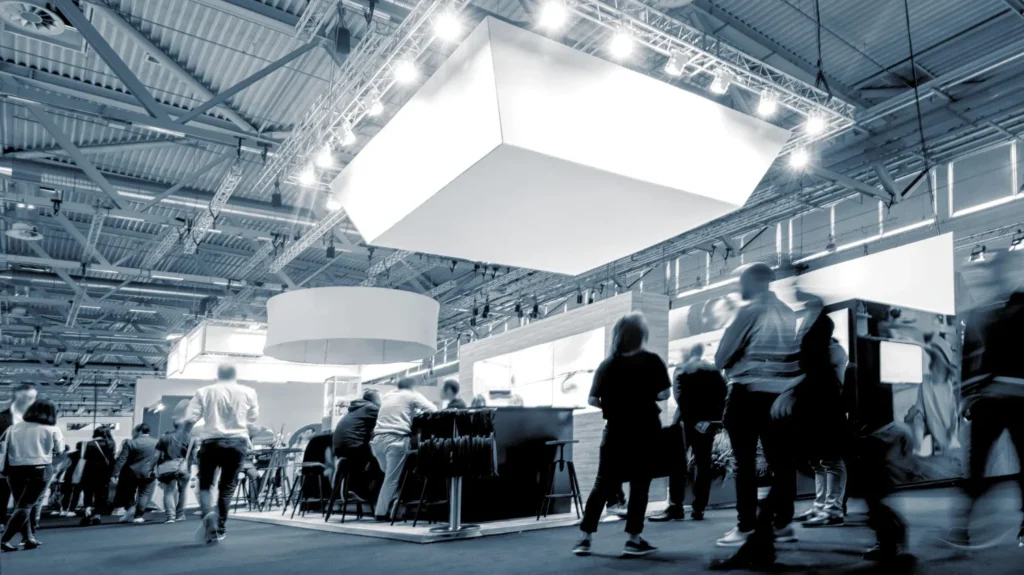
A B2B product launch event carries expectations that extend far beyond introducing something new. It must create perceived value, strengthen brand positioning, and deliver an experience that attendees want to remember and share.
When executed effectively, a B2B launch becomes an immersive experience that not only showcases the product but also builds the context in which it makes sense for the customer’s business. This distinction separates a forgettable event from one that creates meaningful momentum for both the sales pipeline and brand positioning.
In Brazil, product launch events have evolved significantly in both scale and sophistication. What was once a simple presentation has become a strategic experience with a defined theme, professional production, and a clear business purpose. Launches have moved beyond hotel conference rooms into unique venues capable of bringing together media, distributors, employees, customers, and partners simultaneously.
This evolution is not merely aesthetic. It reflects a growing understanding that a product launch event is a powerful commercial lever capable of generating measurable business impact.
What Makes a Product Launch Event Truly Effective
The effectiveness of a corporate launch begins with clarity about the perception it is intended to create.
Before making any logistical decisions, organizations must answer a central question: What story does this product tell, and how will the event tell it?
When brand activation is fully integrated into the event agenda, every element of the experience becomes an extension of the product’s narrative. From registration to closing remarks, everything communicates.
A product focused on operational efficiency should be introduced through an event that demonstrates precision and seamless execution. A product centered on innovation should be presented through an experience that challenges assumptions, surprises participants, and opens new perspectives.
This alignment between the product and the launch experience is what secures a lasting position in the minds of attendees, ensuring that the perception built during the event continues well beyond launch day.
A 10-Step Checklist for a Successful B2B Product Launch
1. Define the Event’s Primary Objective
Every product launch event needs a clear primary goal.
Is the objective to generate leads, accelerate adoption among existing customers, or reposition the brand within a new market?
The answer should guide every subsequent decision and prevent the event from attempting to achieve too many objectives at once, diluting its impact.
2. Map the Audience with Precision
Successful B2B product launches are built on a deep understanding of who will be in the room.
Job roles, familiarity with the category, common objections, and attendee expectations should all shape the event’s content and format.
Events that fail to account for audience diversity risk becoming too technical for decision-makers or too superficial for specialists. Audience mapping provides the foundation for everything that follows.
3. Develop a Creative Concept
The creative concept serves as the backbone of the immersive experience.
It defines the visual theme, communication style, and engagement elements that will be used throughout the event.
A strong concept creates consistency across every touchpoint, from the invitation to post-launch communications.
4. Choose the Format and Venue with Purpose
The venue should reinforce the product narrative.
Industrial environments communicate innovation and scale. Sophisticated venues reinforce a premium positioning.
Selecting a venue is, in itself, a statement about what the product represents in the marketplace.
5. Design the Attendee Journey
The experience begins before the product launch event itself.
Invitations, pre-event communications, registration, and guest reception are all part of the attendee journey and should reflect the quality level the launch aims to communicate.
A poorly executed invitation can undermine expectations before the event even begins.
6. Build an Agenda with Rhythm and Purpose
Long presentation sessions with little variation can quickly diminish engagement.
A successful product launch agenda should alternate seamlessly between presentations, demonstrations, interactive moments, and networking opportunities.
Audience attention is a finite resource, and the agenda should manage it intelligently.
7. Integrate Product Demonstrations into the Narrative
The product should never appear in isolation.
Demonstrations become far more impactful when embedded within a narrative that clearly illustrates how the solution addresses real customer challenges.
Hands-on and immersive experiences often outperform technical presentations because they allow participants to experience the solution rather than simply hear about it.
8. Execute Technical Production with Precision
Lighting, audio, livestream capabilities, signage, and support materials must reflect the positioning of the product itself.
Technical failures during a B2B launch can damage brand credibility far beyond the immediate issue.
Attendees often perceive production quality as a reflection of product quality.
9. Give Post-Event Engagement the Same Level of Attention
The end of the event marks the beginning of the nurturing cycle.
Follow-up materials, decision-support content, and post-launch relationship-building initiatives are just as important as the event experience itself.
Channel incentive programs can be integrated into this phase, helping maintain distributor and partner engagement in the months following the launch.
10. Define Success Metrics Before the Event
Media coverage, social media engagement, scheduled meetings, and 30-day adoption rates are examples of metrics that should be established before the event, never afterward.
Without clear KPIs, launch performance becomes dependent on subjective perceptions.
Today, demonstrating measurable event impact is no longer optional. Corporate product launches are expected to deliver clear business outcomes.
What Happens When a Product Launch Is Poorly Planned
A poorly planned product launch event is never neutral.
It communicates something to the market, even if it is not what the organization intended.
When production quality falls below the standard suggested by the product itself, attendees may assume the company lacks confidence in its offering.
When the audience is poorly targeted, investment in creating impact is wasted.
Without structured follow-up, the momentum generated during the event quickly disappears.
These risks are avoidable through careful planning and by partnering with professionals who understand the business objectives behind the event.
How to Choose the Right Partner for a Product Launch Event
Selecting the right production partner is one of the most critical decisions in a corporate launch.
An experienced partner brings proven formats, a trusted supplier network, and the ability to anticipate challenges before they become problems on event day.
Evaluation criteria should extend beyond the portfolio.
Organizations should assess whether the partner understands the business goals behind the event, has experience with the relevant industry and audience profile, and provides support throughout planning, execution, and post-event engagement.
A well-executed product launch feels effortless to attendees.
What they experience is a seamless event. What makes that possible is a disciplined operation managed by professionals who understand every detail of event production.
Companies that invest in high-quality launch experiences often discover that the return extends beyond immediate pipeline opportunities. A well-executed product launch strengthens brand positioning, generates content that fuels marketing efforts for weeks, and reinforces credibility within the marketplace.
Brand Activation as an Extension of the Product
Brand activation is what transforms a corporate launch from a gathering into an experience with meaningful perceived value.
When the environment, content, hospitality, and supporting materials communicate consistently, the product becomes more than a set of technical specifications.
This consistency of experience is what distinguishes launches that drive results from those that remain only a short-lived memory.
The ideal product launch event is one that continues generating conversations, references, and opportunities long after the lights go out.